How to Measure Bra & Panty Size at Home: 7 Steps
You do not need special equipment to get useful bra and panty measurements at home. A soft measuring tape, a mirror and a few careful measurements can give you a practical starting point before shopping online.
The important part is to treat those measurements as a guide rather than a universal size formula. Bra and panty sizing can vary between brands, countries and product styles, so always compare your measurements with the specific retailer’s size chart before ordering.
This guide explains how to measure bra and panty size at home in seven simple steps, with practical fit checks that are especially useful when shopping online in Pakistan.
Quick Answers: Measuring Bra & Panty Size at Home
Which measurements do I need? For bra sizing, record your underbust and fullest-bust measurements. For panty sizing, record your natural waist and the fullest part of your hips.
Should I add inches to my underbust automatically? No single add-inches rule works across every brand or sizing system. Record the measurement as taken, then use the retailer’s current size chart.
Can one bra or panty size be universal? No. Labelled sizes can vary between brands, markets and garment constructions, so the same measurements may map to different sizes.
What should I do if I fall between sizes? Check the product’s stretch, cup or garment construction and fit notes. An adjacent size or a different style may fit better.
How should I use these measurements when shopping in Pakistan? Pakistani online listings may use UK-style, international or brand-specific conventions. Compare your measurements with the specific retailer’s chart rather than relying only on a familiar size label.
Last reviewed: 10 September 2026. This guide follows the sourcing and correction principles described in the ComfyBliss Editorial Standards & Content Methodology.
What you need before measuring
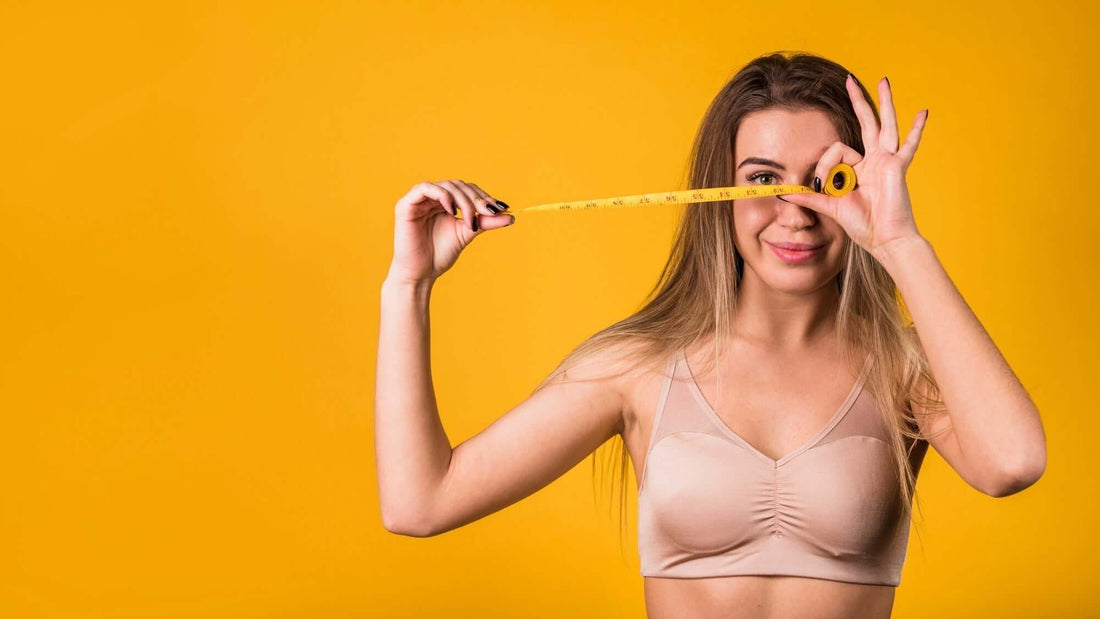
- A soft, flexible measuring tape
- A mirror so you can check that the tape stays level
- Light clothing or a well-fitting, non-bulky bra
- Paper or your phone to record each measurement
Measure in inches or centimetres, but use the same unit throughout. Do not pull the tape so tight that it compresses the body.

1. Measure your underbust
Stand upright and place the tape directly under the bust, around the ribcage. Keep it parallel to the floor and comfortably snug. Check the mirror to make sure the tape has not slipped higher at the back.
Write down the measurement exactly as taken. Do not automatically add inches or round to a band size until you check the sizing method used by the brand you plan to buy from. Different brands can convert the same underbust measurement differently.
2. Measure the fullest part of your bust
Place the measuring tape around the fullest part of the bust. Keep the tape level and relaxed rather than pulling it tightly. Record the measurement.
Your bust and underbust measurements are the two main numbers used by most bra size charts. Some retailers calculate cup size from the difference between them, but cup-letter conversions are not identical across every sizing system. For that reason, use the retailer’s chart rather than relying on one fixed calculation.
3. Use the retailer’s bra size chart
Once you have your underbust and bust measurements, compare them with the brand’s current sizing table. For ComfyBliss products, use the ComfyBliss size chart before ordering.
If your measurements sit between two listed sizes, review the product’s fit information and construction. Stretch fabric, cup shape, padding, wires and band design can all affect how a bra feels even when the label shows the same nominal size.

4. Check bra fit after trying it on
Measurements provide a starting point; the final check is how the bra fits. Look for these practical signs:
- The band sits level around the torso instead of riding noticeably upward.
- The cups contain the breast tissue without obvious gaping or overflow.
- The centre and cup shape sit comfortably for that particular bra design.
- Straps stay in place without needing excessive tightening.
- If the bra has underwire, it should sit around the breast tissue rather than pressing into it.
If one area feels wrong, another size or a different bra shape may fit better. A non-padded bra, a padded bra and a full-coverage bra can fit differently even in the same labelled size.
5. Measure your natural waist for panty sizing
For panties, start by measuring around your natural waist. This is usually the narrower part of the torso, but the exact position can vary from person to person. Keep the tape level and comfortably close to the body.
Some panty styles rely more heavily on the hip measurement than the waist measurement, but recording both gives you more information when comparing size charts.
6. Measure the fullest part of your hips
Stand with your feet naturally positioned and wrap the tape around the fullest part of your hips and seat. Use a mirror to check that the tape remains horizontal all the way around. Record the measurement without pulling the tape tightly.
Do not assume that one hip measurement always equals Small, Medium, Large or XL across every retailer. Panty size ranges are brand-specific, so compare your waist and hip measurements with the current chart for the product you are considering.
7. Match the measurement to the panty style
After choosing a size from the retailer’s chart, consider the cut and coverage. High-waisted panties, hipsters, briefs, bikini cuts and thongs sit at different points on the body and can feel different even when they share a size label.
For example, a shopper who prefers more coverage may choose a high-waist panty, while someone prioritising a lower rise may prefer another cut. The goal is not to match a body type to a fixed style; it is to choose the coverage and construction you prefer.

How often should you measure again?
There is no universal rule that everyone must remeasure on a fixed six-month schedule. It makes sense to check your measurements again when your current bras or panties no longer fit as expected, when you are buying from a brand with unfamiliar sizing, or after a noticeable change in body measurements.
Even when your measurements have not changed, different styles can require a different fit decision. Always use the current product size chart rather than assuming that a previous purchase guarantees the same fit in every design.
Common home-measurement mistakes
- Using a rigid tape: use a flexible measuring tape that can follow the body.
- Letting the tape slope: use a mirror to keep it level around the body.
- Pulling too tightly: the tape should sit close without compressing the body.
- Using one brand’s size as a universal standard: compare measurements with each retailer’s chart.
- Ignoring the product style: stretch, padding, wires, cup construction and panty rise can affect fit.
Bra and panty sizing when shopping online in Pakistan
Online listings in Pakistan may use local, UK-style, international or brand-specific sizing conventions. Do not rely only on a familiar size label. Check the actual measurement table and any product-specific fit notes first.
If you are buying a matching set, confirm whether the bra and panty sizes can be selected separately or whether the set uses a fixed size combination. Browse bra and panty sets and review the sizing details on the individual product page before checkout.
Frequently asked questions
How do I measure bra size at home?
Measure the underbust and the fullest part of the bust with a soft tape, then compare both measurements with the retailer’s current bra size chart. Avoid treating one cup-size formula as universal because conversion methods can differ between brands and sizing systems.
How do I measure panty size?
Measure your natural waist and the fullest part of your hips, then compare those numbers with the retailer’s panty size chart. The same measurements can map to different labelled sizes at different brands.
Can I measure over clothes?
Light, close-fitting clothing is usually easier to measure over than bulky clothing. For bra measurements, avoid thick or heavily padded layers that can noticeably change the measurement.
What if I am between sizes?
Check the product’s stretch, cut and fit notes. Depending on the design and your preferred fit, the better option may be the adjacent size or a different style rather than forcing one fixed rule.
Evidence and sizing note
Published research has documented meaningful variation in bra sizing between manufacturers, and studies of measurement methods show that the way measurements are taken can affect calculated bra size. These studies do not establish one universal sizing formula for Pakistan or every brand. That is why this guide treats measurements as a starting point and recommends checking the retailer’s current chart and the actual fit of the individual product.
- PubMed — Understanding Variation in Bra Cup Sizing Among Leading Manufacturers
- PMC — How respiratory state and measurement method affect bra size calculations
- ComfyBliss Editorial Standards & Content Methodology
Final takeaway
To measure bra and panty size at home, record four useful measurements: underbust, bust, waist and hips. Then use the retailer’s own size chart and check the fit of the specific style. Measurements narrow the search; the product’s construction and actual fit complete the decision.
For ComfyBliss items, review the size guide before ordering and compare it with the details shown on the product page.